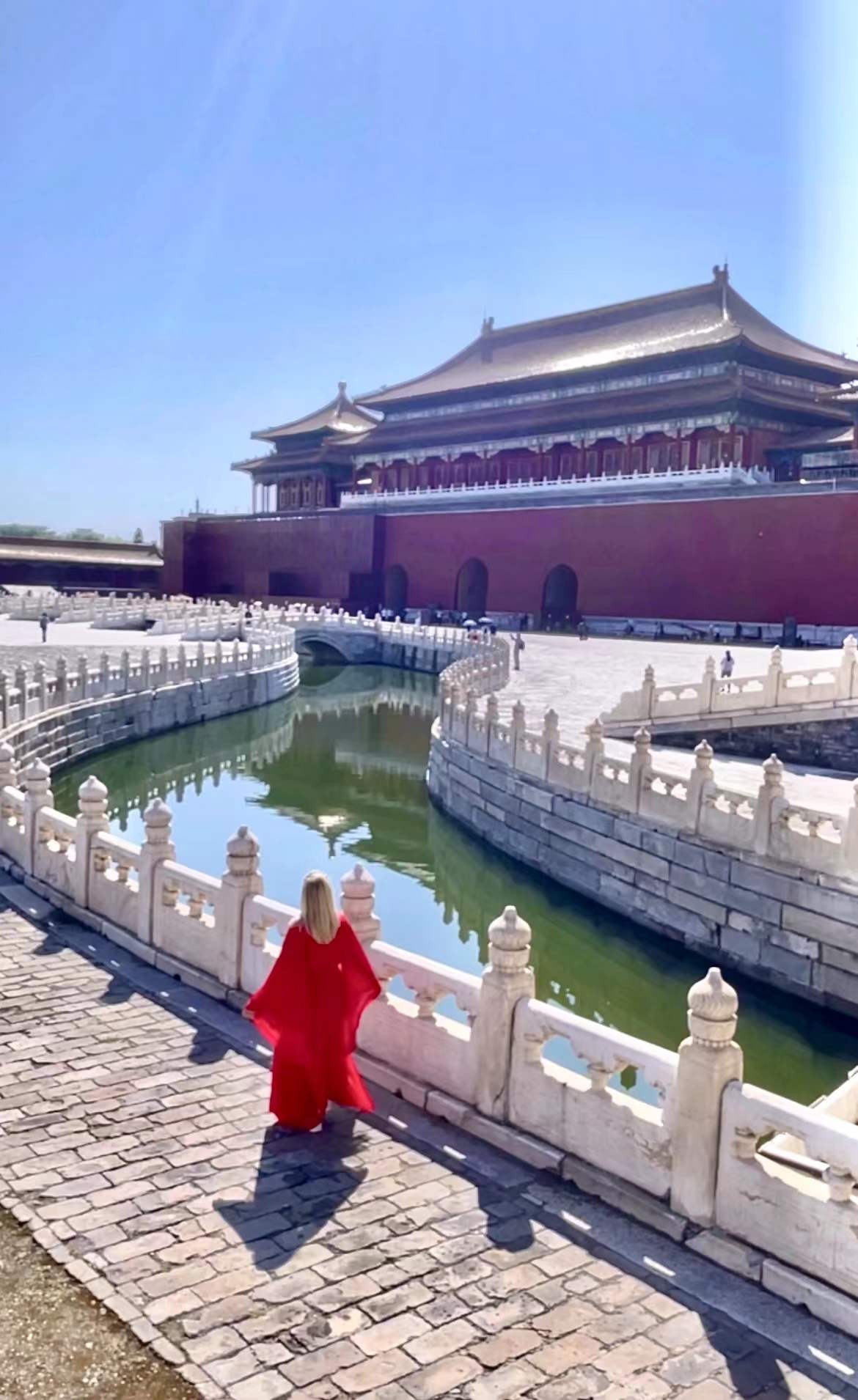
A popular way to experience Chinese culture firsthand is by trying on traditional Chinese clothing like Hanfu. The Hanfu, a symbol of the elegance and grace of ancient Chinese dynasties, presents an unparalleled opportunity to immerse oneself in the rich tapestry of China’s history and traditions.
When visiting tourist sites, it’s common for both Chinese visitors and foreigners to visit Hanfu rental shops. Here, they can select traditional clothing and opt for historical hair and makeup styles, immersing themselves in the fashion of past Chinese dynasties.

I’ve had the opportunity to rent and wear Hanfu on numerous occasions, from the iconic Forbidden City in Beijing to the vibrant streets of the Tang Dynasty Everbright City in Xi’an. In this guide, I’ll walk you through the steps of renting a Hanfu.
- Finding a Hanfu Rental Shop
- Tips for using Dianping
- Hanfu Costs and Deposit
- Hair and Makeup Process
- Taking Photos
- Hanfu Styles Across Dynasties
- Cultural Respect When Wearing Hanfu
- Renting a Hanfu in China
Finding a Hanfu Rental Shop
The first step is finding a rental shop. You might happen across clothing rental shops around popular tourist attractions, like the Datang Everbright City in Xi’an, and the Forbidden City in Beijing.
But the best way to find shops is through Dianping. The Dianping app, China’s equivalent of Yelp, is a valuable tool for finding businesses, including Hanfu rental shops. I also use this app for finding restaurants, bars, cafes, and more.
Watch my video guide below to see how found a rental shop!
Tips for using Dianping
Screenshot and Translate: The app is all in Chinese, but if you familiarize yourself with it a little and know how to copy/paste Chinese characters it’s possible to use! It will save you time rather than trying to wander around and find one.
Search Keywords: I honestly just search the characters for “Hanfu” on Dianping: 汉服. This will pull up Hanfu shops in the city I’m in, and from there I will filter and use the map function to find a shop near the location I’m looking for.

For the Forbidden City, I found a cluster of Hanfu shops near the southeast side of the Forbidden City, west of Wangfujing.
I went to this shop called 诗雅阁清宫汉服馆 (Shiya Ge Qing Gong Hanfu Shop).
- Address: 75 Donghuamen Street, Dongcheng District, Beijing
- 北京市东城区东华门大街75号

Hanfu Costs and Deposit
You can choose to use Dianping to book a Hanfu package (usually with a great discount), or walk in and browse a shop to see what they have. The cost of renting a Hanfu varies depending on the design and quality of the attire, and usually include a rental fee plus a deposit.
For my Forbidden City Hanfu experience, I paid 298 RMB for the Hanfu rental plus hair, makeup, and accessories, then I paid an 800 RMB deposit. This deposit serves as insurance against any damage or loss of the Hanfu and is refunded upon its safe return.
In Xi’an I paid 398 RMB for clothing, hair and makeup, plus a 500 RMB deposit. So the cost will really vary depending on the shop and style.

Other Helpful Things To Know:
Basic Packages: Most shops usually offer certain basic packages that include clothing, hair, makeup, and accessories.
Try On Policy: Some shops might have a certain policy for how many clothing you are allowed to try on before you decide which one you want. For example in Xi’an they told me I could choose 2 to try on before deciding.
Return Policy: Most shops require clothing to be returned by a specified time, typically in the evening when the shop closes. In my case, I needed to return the Hanfu by 6pm to receive my deposit back.
Photography Options: Some Hanfu rental shops also offer photography services you can add onto your package. This is optional, so you can also just take your own photos.


Hair and Makeup Process
After selecting your Hanfu clothing, the next step is getting your hair and makeup done. This process can vary in duration, typically ranging from 30 minutes to 2 hours, depending on the complexity of the style and whether one person is handling both your hair and makeup.
In Beijing, I had two women handle my hair and makeup, which made the whole process surprisingly quick—just 30 minutes! While my makeup was kept relatively simple, getting my hair just right took a bit more time.
They started by styling my hair and pinning it back. They had these ready-made hairpieces that they effortlessly pinned into place. And they even asked if I wanted to temporarily dye my blonde hair to match the black hairpieces! It sounded fun, so I went for it, adding a cool twist to my Hanfu look.


In Xi’an the process took around 1.5 hours.


Taking Photos
After your hair and makeup are done and your clothing is on, go out and enjoy taking photos!


Hanfu Styles Across Dynasties
Hanfu, the traditional clothing of Han Chinese, has evolved over various dynasties, each characterized by distinct styles and aesthetics. The style you encounter will typically be influenced by the specialty of the shop or the city you’re in.
- Shang & Zhou Dynasties (1600 BCE – 256 BCE):
- Simple and elegant robes with wide sleeves and belted waists.
- Minimalistic designs often adorned with embroidered patterns.
- Han Dynasty (206 BCE – 220 CE):
- Introduction of cross-collar robes and wide-sleeved attire.
- The use of silk became prominent, with intricate embroidery and decorative motifs.
- Tang Dynasty (618 CE – 907 CE):
- Hanfu evolved into more elaborate styles, with layered robes and voluminous sleeves.
- Women’s clothing featured ornate headpieces and intricate hairstyles.
- Song Dynasty (960 CE – 1279 CE):
- Fashion emphasized simplicity and elegance, with narrower sleeves and tailored silhouettes.
- Scholar-officials often wore scholar’s robes, characterized by square sleeves and a long gown.
- Ming Dynasty (1368 CE – 1644 CE):
- Revival of traditional Hanfu styles, with emphasis on refined craftsmanship and intricate details.
- Formal attire included long robes with wide sleeves, often adorned with elaborate embroidery.
- Qing Dynasty (1636 CE – 1912 CE):
- Influenced by Manchu clothing traditions, Hanfu featured high collars and fitted jackets.
- Robes were layered, with decorative elements such as embroidered borders and intricate patterns.
Each dynasty’s Hanfu reflects the cultural and stylistic influences of its time, offering a glimpse into the rich history and heritage of ancient China.
Tang Dynasty
In Xi’an, it’s popular to wear the Tang Dynasty style Hanfu.
Qing Dynasty Manchu Clothing
In Beijing by the Forbidden City, I found the Qing Dynasty style Manchu clothing.
Cultural Respect When Wearing Hanfu
Respect for cultural traditions is paramount when renting and wearing a Hanfu in China. It’s essential to approach the experience with a deep appreciation for the cultural significance behind this traditional attire.
In my experience, Chinese people are incredibly supportive and encouraging of foreigners who express interest in their clothing and customs. I’ve asked many Chinese friends and people I’ve met when traveling if it’s okay that I wear Chinese traditional clothing, and every time I’ve been met with enthusiastic yeses and encouragement.
I think that embracing the Hanfu with respect and curiosity helps foster a sense of cultural exchange and understanding. Engaging with the local people while wearing Hanfu can lead to meaningful interactions and connections, as you share in the appreciation for China’s rich heritage.
Just a friendly reminder to wear Hanfu with cultural sensitivity and respectfulness.

Renting a Hanfu in China
Renting traditional clothing in China offers a delightful opportunity to delve into the country’s rich cultural heritage. From exploring majestic historical sites to posing for photos in traditional attire, the experience is nothing short of magical. By following the steps outlined in this guide, you’ll be well-equipped to embark on your own Hanfu adventure and create unforgettable memories along the way.